

Envision Unveils 12.5MWh AI Energy Storage System and Starts Mass Production of 790Ah Battery Cell
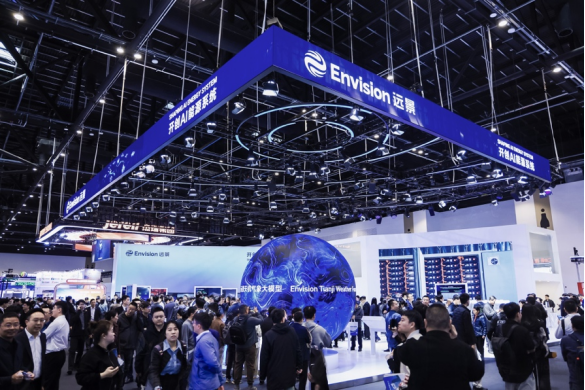
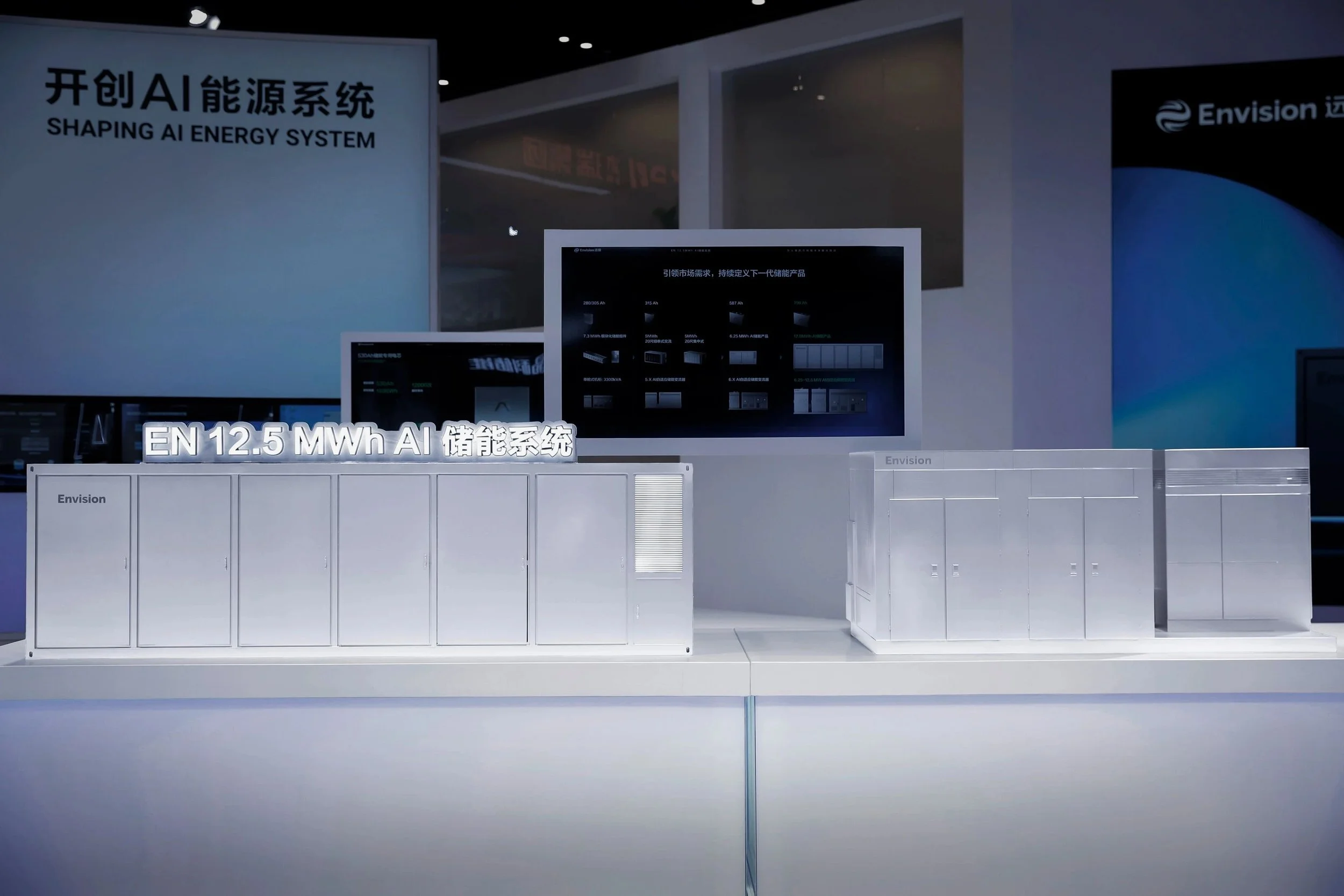
On April 1, at the 14th Energy Storage International Summit and Exhibition (ESIE 2026) in Beijing, Envision introduced its latest 12.5MWh AI Energy Storage System, powered by a new-generation AI-adaptive Power Conversion System (PCS), and announced the start of mass production of its 790Ah prismatic wound battery cell, currently the world's largest battery cell designed for energy storage applications.
The company also unveiled its first sodium-ion battery for energy storage and announced the deployment of the world's first 100% renewable-powered AI Data Center (AIDC) in collaboration with leading AI companies, further expanding the application scenarios of battery energy storage systems.
AI-Driven Energy Storage for the Asset Era
As the energy storage industry enters what Envision describes as the "asset era," project profitability has become increasingly dependent on intelligent operation rather than hardware alone.
To address market uncertainty, Envision integrates its proprietary Tianji Weather Foundation Model and Tianshu Energy Foundation Model with physics-based AI technologies to enable autonomous sensing, adaptive optimization, and continuous self-evolution throughout the entire lifecycle of an energy storage project—from planning and engineering to manufacturing, operation, and electricity trading.
According to Envision, these AI capabilities can improve a project's internal rate of return (IRR) by 4%–8% over its lifetime by enhancing operational efficiency and market participation.
790Ah Battery Cell Optimized for Utility-Scale Energy Storage
The EN 12.5MWh AI Energy Storage System is powered by Envision's newly launched 790Ah dedicated energy storage battery cell, the world's largest prismatic wound cell currently in mass production.
Key specifications include:
Energy density exceeding 440Wh/L
More than 15,000 charge-discharge cycles
Calendar life of up to 30 years
Cell-level round-trip efficiency (RTE) of 96%
To enhance safety, the battery incorporates a proprietary high-safety electrolyte, an innovative thermal-gradient reaction design, and directional venting and cooling channels to mitigate thermal risks associated with large-format battery cells.
The product has successfully passed multiple high-risk safety tests, obtained certifications from leading international organizations, and has entered commercial production.
Envision emphasized that the launch of the 790Ah cell is not simply about increasing capacity. Instead, it represents the optimal balance between battery materials, manufacturing processes, equipment compatibility, system integration, project economics, and grid performance.
The company previously commercialized 300Ah+ and 500Ah+ battery platforms before introducing the new 790Ah generation.
Powered by third-generation silicon carbide (SiC) PCS technology and AI-enabled thermal management, the EN 12.5MWh system delivers:
System efficiency above 92%
37.6% reduction in site footprint through a large-block system architecture
More than 50% improvement in grid connection efficiency
AI-powered electricity price forecasting accuracy exceeding 90% at key trading intervals
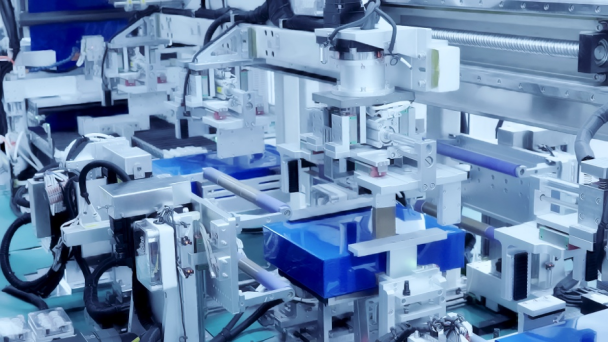
Mass Production Line for Envision 790Ah Cells
AI-Adaptive PCS Redefines the Grid Interface
Envision also introduced its new 6.X–12.XMW AI-Adaptive Integrated PCS and Step-Up Transformer Solution, leveraging more than 16 years of expertise in power electronics.
The self-developed PCS features third-generation silicon carbide technology, achieving:
Power conversion efficiency of up to 99.3%
Full-power operation without derating at ambient temperatures of 55°C
The PCS integrates a native AI engine capable of:
Real-time adaptive operation under varying grid conditions
Millisecond-level prediction of grid fluctuations
Full lifecycle health management
Seamless on-grid/off-grid switching
Black-start capability within minutes
The system supports grid-forming applications, frequency regulation, AI data centers, and other high-reliability power supply scenarios.
It has already obtained grid-forming certifications from multiple international organizations, including Germany's VDE FNN, Spain's REE, and Australia's AEMO.
Envision continues to pursue a fully integrated technology strategy by developing all major system components in-house, including battery cells, PCS, Battery Management Systems (BMS), Energy Management Systems (EMS), SCADA platforms, and electricity trading optimization software.
Expanding into Sodium-Ion Storage and AI Data Centers
To address emerging market opportunities, Envision also showcased its first sodium-ion battery cell designed specifically for energy storage.
Commercial production began in March 2026.
Key specifications include:
Capacity exceeding 180Ah
Operating temperature range from -40°C to 70°C
More than 20,000 charge-discharge cycles
The battery is designed for applications including AI data center backup power and energy storage projects operating in extreme climate conditions, complementing existing lithium-ion technologies.
Envision also introduced its end-to-end energy management solution spanning battery cells, power conversion, grid integration, and intelligent control to support the rapidly growing power demand of AI data centers.
The company has already partnered with Tencent to deploy the world's first 100% renewable-powered AI data center in Chifeng, Inner Mongolia, reducing total energy costs by more than 40% while cutting annual carbon emissions by approximately 180,000 tonnes.
In addition, Envision is collaborating with a leading AI company to develop what it describes as the world's largest zero-carbon AI Data Center (AIDC) campus in Ulanqab, with project delivery expected later this year.
As electricity market reforms accelerate and the global energy transition continues, Envision believes energy storage is evolving from a hardware asset into an AI-enabled infrastructure asset. By combining AI with advanced battery technologies, the company aims to improve renewable energy profitability, accelerate global decarbonization, and enable the next generation of intelligent energy systems.