

On September 29, the HyperStrong Baotou Storage-Computing Integration Project and Token Factory held its groundbreaking ceremony in Bu'ertu Town, Kundulun District, Baotou, marking China's first project coupling a grid-side energy storage station with a distributed intelligent computing center. The China Energy Storage Alliance (CNESA) notes that the project replaces diesel backup generators at traditional computing centers with energy storage systems, and builds a dynamic operating mechanism of "computing follows electricity, electricity adjusts to computing" on the flexible load characteristics of computing, converting green power on-site into measurable, priceable token services. Energy storage stations are moving up into the high-value end of the digital economy value chain.
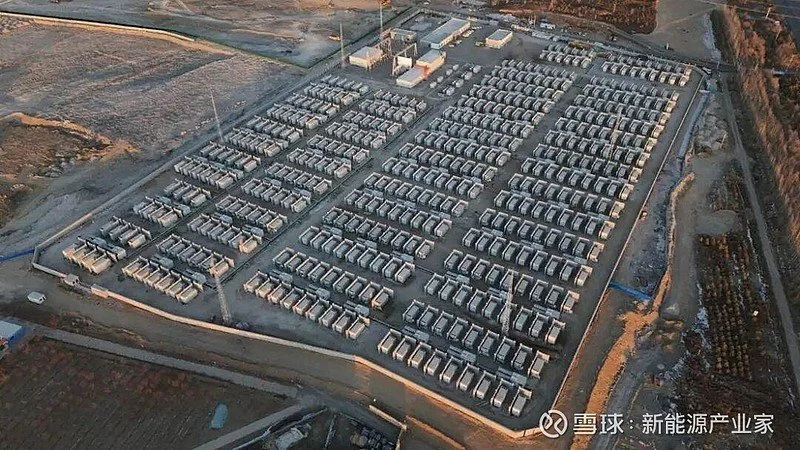
1. Project Form: One Foundation Linking Energy to Computing
Built on an integrated energy-computing foundation, the project links the full chain of energy supply, storage peak regulation, and computing dispatch. The grid-side energy storage station replaces diesel backup power with storage systems, sharply cutting one-time construction costs while ensuring stable green power supply; the supporting distributed green intelligent computing center handles mass token production for applications such as large model training, high-end intelligent inference, and industrial simulation, and is scheduled for completion by the end of 2026. The technology base comes from HyperStrong's self-developed HyperPTU power cabins and HyperSST solid-state transformers, the latter converting 35 kV directly to 800 V at over 98% efficiency, with the product launch planned for the end of 2026. Project partners include computing operations company Parallel Tech, Huawei Digital Power, and Guangdong No.2 Hydropower Engineering.
2. Operating Mechanism: Computing Follows Electricity, Electricity Adjusts to Computing
Treating computing power as a flexible load, the project builds a dynamic mechanism of "computing follows electricity, electricity adjusts to computing" precisely matched to the intermittency and volatility of wind and solar generation: absorbing surplus wind and solar power during green-power-rich, low-price periods, and stably powering computing clusters during peak hours. Two-way intelligent dispatch between storage and computing efficiently activates idle renewable resources. The Outline of the 15th Five-Year Plan explicitly calls for the coordinated deployment of green power and computing; this project goes beyond conventional computing-electricity coordination paths such as direct green power supply to further open high-value application scenarios for the storage industry.
3. Token Factory: Turning Computing Output into Measurable, Priceable Services
Liu Jingjuan, Deputy Secretary-General of the Computing-Electricity Coordination Working Committee of the China Computer Industry Association, commented that the project builds a "source-grid-load-storage" closed loop through the coordinated planning and operation of grid-side storage and distributed intelligent computing; by organizing computing production in the form of a token factory, it maps computing output to measurable, priceable token services, providing a verifiable practice scenario and a pilot sample for the value transformation of computing-electricity coordination from supplying computing resources to supplying computing services. Zhan Xiaolin, Vice President of Beijing HyperStrong Technology Co., Ltd., said the core value of the project lies in opening a complete value chain from energy to the digital economy: green power is converted on-site into computing resources, and the energy industry completes deep value addition through the token factory, with industrial value capable of a major leap. HyperStrong Chairman Zhang Jianhui previously proposed "from selling energy storage to selling tokens", the most direct annotation of the project's business model.
4. CNESA Observation: Energy Storage Moves Up in Computing-Electricity Coordination
Previously, energy storage's role in data centers was mainly "inside-the-facility" support: rack-level backup power (high-rate BBUs), UPS, and campus-level storage. The Baotou project places the storage station on the grid side and couples it with a distributed intelligent computing center, making storage the hub through which green power enters computing production, extending its application scenarios from inside the station to the system level. On the policy timeline, "computing-electricity coordination" was written into the Government Work Report for the first time in March 2026, followed by deployments of direct green power supply and grid-forming storage at computing facilities; the Baotou project is the latest engineering sample on this policy chain. The context is telling: Baotou hosted China's first park-level token base in April 2026; the city's combined intelligent and general computing power exceeds 10,000P, with about 9,000P under construction or planning; and HyperStrong already operates GWh-scale energy storage stations in Baotou. For storage companies, coupling with high-energy-consuming flexible loads such as computing extends the revenue sources of storage stations from the electricity market into the digital economy value chain, adding the option of "selling tokens" beyond "selling electricity".
Source material: public reports by Xinhua News Agency, Economic Daily, Securities Times, CNR News, and Shanghai Securities News
